
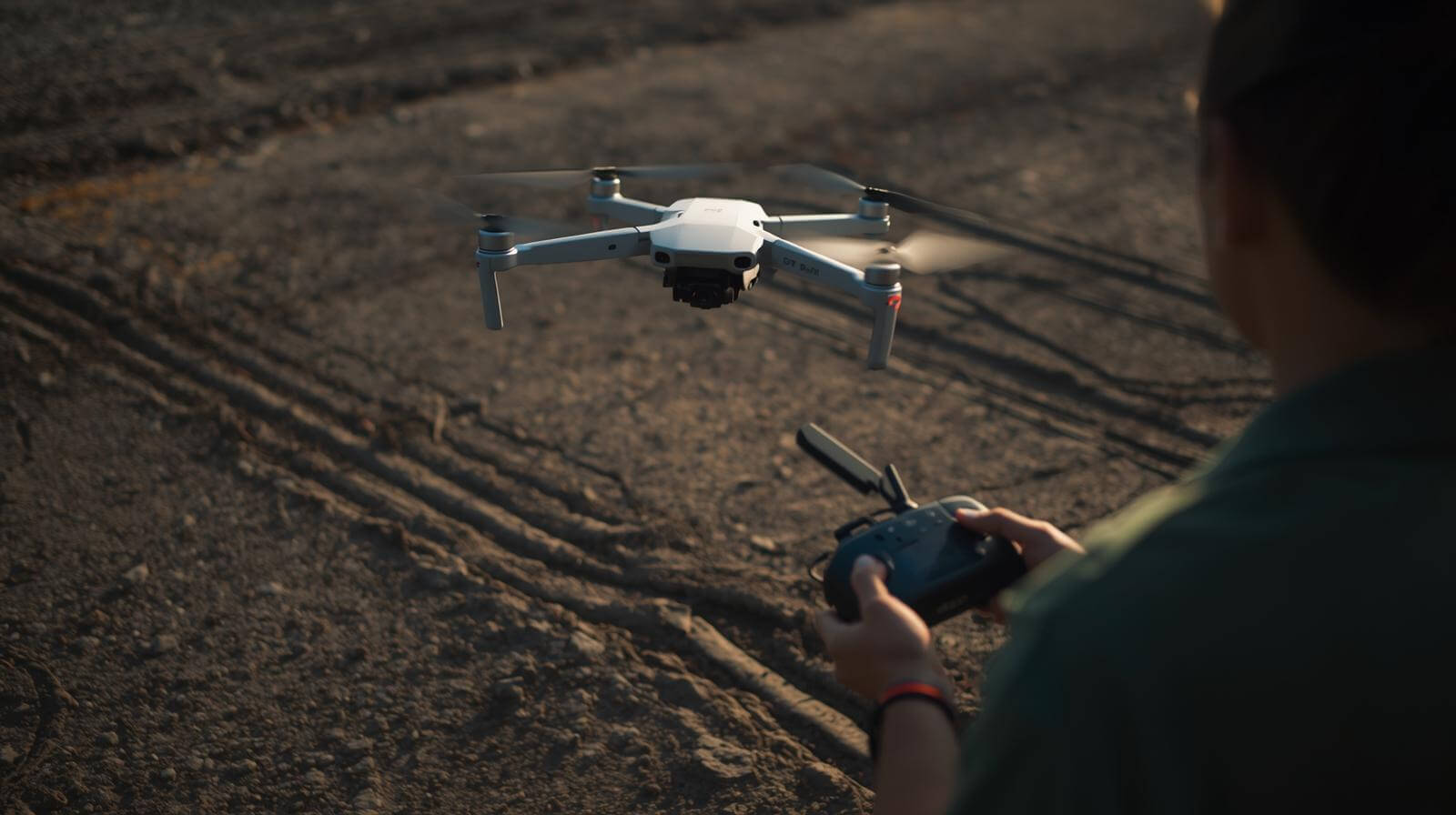
In professional drone operations, failure rarely looks dramatic. More often, the aircraft lands safely—but the data doesn’t. As drones move into harsher environments and higher-value missions, storage reliability has become just as critical as flight stability. This is where a shockproof microSD card for drone applications makes a measurable difference.
1. When Drones Don’t Crash — but Your Data Still Does
The Overlooked Risk: Micro-Shocks During Normal Drone Operations
Most operators associate “shock” with crashes, but in reality, drones experience hundreds of micro-shocks during routine flights. Every takeoff introduces vibration as motors spin up. Rapid braking or yaw correction generates brief G-force spikes. Even a controlled landing on uneven ground transfers mechanical stress directly to internal components—including the storage.
In one commercial survey project, a drone flew flawlessly for weeks, yet footage corruption appeared intermittently. The issue wasn’t speed or capacity, but cumulative micro-shock stress on a standard microSD card for drone use that wasn’t designed for repeated vibration.
Practical tip:
If your drone performs frequent start-stop maneuvers or flies in wind-exposed environments, storage durability matters as much as performance specs.
Understanding these invisible stresses sets the stage for a more serious question: what happens when shock damage isn’t obvious at all?
Real Incident: Footage Lost Without a Visible Drone Failure
A construction inspection team once completed a full day of flights without incident. The drone landed safely, batteries were intact, and the camera showed no errors. However, back at the office, the microSD card was unreadable. Recovery tools failed. The footage—irreplaceable—was gone.
Post-analysis traced the failure to internal microSD damage, likely caused by repeated vibration and a slightly hard landing earlier that day. There was no crash, no warning, and no visible sign of failure in the air. The weakest point wasn’t the drone—it was the storage.
This scenario highlights a critical truth: a microSD card for drone use can fail silently, long after the flight ends.
Practical tip:
Data integrity should be treated as part of flight safety. If a card isn’t built for shock tolerance, it becomes a hidden single point of failure.
This leads us to the technical core of the issue—why shock is so destructive to standard microSD cards.
2. Why Shock Is a Silent Killer for microSD Cards in Drones
What “Shock” Really Means in Drone Environments
In drone operations, shock isn’t a single event—it’s a pattern. During aggressive maneuvering, drones experience short but intense G-force spikes. Motors generate continuous vibration throughout flight. Landings, even gentle ones, transfer sudden impact through the airframe to internal electronics.
Unlike cameras or gimbals, storage components lack mechanical isolation. A microSD card for drone use is directly exposed to:
-
Repeated vibration from motors
-
G-force spikes during directional changes
-
Sudden impact during landing
Over time, these forces accumulate. Lab testing has shown that repeated low-level shock can be just as damaging as a single hard impact, especially in compact storage devices.
Recognizing shock as a continuous condition—not a rare accident—helps explain why some cards fail long before their expected lifespan.
Why Standard Consumer microSD Cards Fail Under Shock
Consumer microSD cards are optimized for phones, cameras, and tablets—devices with relatively stable operating conditions. Internally, many rely on delicate solder joints, minimal PCB reinforcement, and tightly packed components. Under repeated shock, these designs show weaknesses.
Common failure mechanisms include:
-
Fragile solder joints cracking under vibration
-
Controller and NAND separation after impact
-
No internal reinforcement to absorb mechanical stress
In drone use, these weaknesses become critical. A consumer microSD card for drone deployment may pass initial tests but degrade unpredictably over time.
Practical tip:
If a card is marketed primarily for smartphones or gaming, it’s likely not designed for mechanical stress.
This brings us to an important clarification—why speed ratings alone can never guarantee durability.
Shock vs Speed: Why Speed Ratings Don’t Tell the Full Story
Speed classes like V30 or V60 describe data throughput, not physical resilience. A card can meet every performance benchmark and still fail under shock. In other words:
-
V30 / V60 ≠ shock resistance
-
High performance ≠ high durability
For professional users, relying solely on speed ratings creates a false sense of security. To truly protect data, shock tolerance must be designed into the hardware itself.
That distinction becomes clear when we look at how shockproof microSD cards are actually built.
3. What Makes a Shockproof microSD Card for Drone Different?
Internal Design Features That Improve Shock Resistance
A shockproof microSD card for drone applications isn’t defined by marketing language—it’s defined by internal engineering. Instead of prioritizing peak speed alone, these cards focus on mechanical stability and long-term reliability.
Key design differences include:
-
Reinforced controller mounting to prevent movement under impact
-
Industrial-grade PCB layouts that distribute stress evenly
-
Secure NAND bonding to reduce micro-fractures
In field tests, cards with reinforced internals maintained data integrity after repeated vibration cycles where standard cards showed early failure signs.
Practical tip:
Ask suppliers about internal construction, not just speed class. If they can’t explain it, it’s likely not shock-focused.
Still, not every product labeled “shock-resistant” offers true protection—which leads to a critical comparison.
Shockproof vs “Shock-Resistant” Marketing Claims
Many products claim durability, but few define it clearly. The difference between “shock-resistant” and genuinely shockproof becomes apparent when comparing real specifications:
| Feature | Consumer Card | Shockproof Card |
|---|---|---|
| Drop tolerance | Minimal | High |
| Vibration tolerance | Low | Tested |
| Data retention after impact | Uncertain | Stable |
A true shockproof microSD card for drone use is tested under mechanical stress, not just assumed to survive it.
Why Shockproof Matters Even If the Drone Survives
Modern drones are designed to absorb impact through frames, landing gear, and gimbals. Storage, however, absorbs the residual force—the energy that travels inward after the structure does its job.
That’s why drones often survive incidents that storage does not.
Understanding this reality naturally leads to the next question: which drone applications face the highest shock risk—and where shockproof storage is essential.
4. Drone Applications Where Shockproof microSD Cards Are Essential
Industrial Inspection & Infrastructure Monitoring
Industrial inspection environments are inherently hostile to electronics. Wind turbines generate constant vibration. Power-line inspections require abrupt directional changes to maintain distance. Construction sites often involve dusty conditions and uneven landing zones. In these scenarios, drones may never crash—but they experience continuous mechanical stress.
A European energy contractor reported recurring data corruption during turbine inspections despite stable flights. The issue disappeared only after switching to a shockproof microSD card for drone operations, specifically designed to withstand vibration and repeated impact.
High-risk inspection environments include:
-
Wind turbines with persistent oscillation
-
Power lines requiring aggressive stabilization
-
Bridges and construction sites with rough landings
Practical tip:
If your drone regularly operates near large mechanical structures, prioritize storage rated for vibration tolerance—not just speed.
These conditions intensify further in missions that rely on automation and repetition, which brings us to mapping and surveying workflows.
Mapping, Surveying, and Autonomous Missions
Mapping and surveying missions push drones into repetitive, endurance-heavy operation. Automated flight paths mean repeated takeoffs and landings, long hover times, and constant write cycles. Unlike creative filming, these missions leave zero margin for data loss—a single corrupted dataset can invalidate an entire survey.
One land-survey firm operating autonomous grid flights found that consumer cards degraded after weeks of use, even without visible damage. The switch to a shockproof microSD card for drone use significantly reduced mission failures by stabilizing storage under repetitive stress.
Key stress factors in these missions:
-
High-frequency landings
-
Long continuous recording cycles
-
No human intervention during flight
Practical tip:
For autonomous operations, treat storage as mission-critical hardware, not a consumable accessory.
When environments become unpredictable and response time matters, the risks increase even further.
Emergency, Public Safety, and Field Operations
In emergency response and public safety operations, drones are deployed under pressure. Landing zones are improvised. Environmental conditions change rapidly. Equipment is often handled quickly, sometimes roughly. In these moments, a microSD card for drone use must survive more than just flight—it must endure real-world chaos.
Fire departments and search-and-rescue teams have documented cases where drones captured vital footage, only for data to be unreadable afterward due to shock-induced storage failure. In time-critical scenarios, there is no opportunity to re-fly.
Common risk factors include:
-
Unstable terrain
-
Rapid redeployment
-
High operator stress
Practical tip:
If the data supports life, safety, or legal evidence, shockproof storage should be a baseline requirement.
Understanding where shock matters most naturally leads to the next question: how can buyers tell which products are genuinely shockproof?
5. How to Evaluate Shockproof Claims When Choosing a microSD Card for Drone
Key Specifications Buyers Should Ask For
Not all shockproof claims are equal. Professional buyers should look beyond labels and demand measurable criteria. A truly shock-capable microSD card for drone applications will disclose mechanical and environmental tolerances.
Key specifications to request include:
-
Shock rating: Measured in G-force tolerance
-
Vibration standards: Compliance with industrial or military test methods
-
Operating temperature range: Especially for outdoor and high-altitude use
Cards without documented test parameters rely on assumptions, not engineering.
Practical tip:
If a supplier cannot provide test conditions or standards, assume shock resistance is unverified.
This scrutiny becomes even more important when marketing language sounds impressive—but lacks substance.
Red Flags in “Shockproof” Product Marketing
Some products rely on durability buzzwords without technical backing. These cards may perform well initially but fail unpredictably in drone environments.
Common red flags include:
-
No published test data or standards
-
No stated lifecycle or endurance guidance
-
Positioning focused solely on consumer electronics
In professional drone fleets, these gaps translate directly into operational risk.
Practical tip:
Avoid products that emphasize lifestyle imagery over technical validation.
To reduce uncertainty further, buyers can implement simple real-world tests before deployment.
Practical Tip: How to Test Shock Stability in Real Use
Before committing cards to the field:
-
Perform pre-deployment stress testing with repeated insertions and landings
-
Run a full-capacity write and read verification after testing
These steps help identify weak cards early and prepare teams for consistent performance—setting the stage for selecting a reliable long-term supplier.
6. How Dellwa Solves the Shock Problem for Professional Drone Storage
Shock-Focused Design Philosophy at Dellwa
Dellwa approaches drone storage from an engineering-first perspective. Instead of optimizing for peak benchmark numbers alone, Dellwa focuses on component-level stability, recognizing that shock resistance is built internally—not advertised externally.
Core principles include:
-
Stable controller and NAND integration
-
Industrial-grade component sourcing
-
Validation under shock and vibration conditions
Practical insight:
This philosophy ensures predictable behavior across real-world drone missions, not just lab tests.
That foundation enables Dellwa to deliver shockproof solutions suited for demanding environments.
Dellwa Shockproof microSD Cards for Drone Applications
Dellwa shockproof microSD card for drone solutions are designed for repeated mechanical stress. They maintain stable write performance even after vibration exposure or minor impact events—conditions common in professional drone use.
Designed for:
-
Repeated takeoffs and landings
-
Long-duration missions
-
Harsh industrial environments
Field deployments have shown improved data stability and reduced storage-related mission failures when fleets standardized on Dellwa cards.
This performance naturally leads to long-term trust among professional operators.
Why B2B Drone Operators Choose Dellwa
For B2B buyers, consistency matters as much as performance. Dellwa supports professional drone operations with a supply model built for scale and longevity.
Key reasons operators choose Dellwa:
-
BOM consistency across production batches
-
Long-term availability for multi-year projects
-
Technical consultation support tailored to drone applications
Rather than selling storage as a commodity, Dellwa positions it as part of a reliable drone ecosystem—reducing risk, simplifying procurement, and supporting professional success.
7. Frequently Asked Questions About Shockproof microSD Cards for Drones
1 What makes a microSD card shockproof?
A shockproof microSD card for drone use is built with reinforced internal components and validated to withstand vibration and impact without data corruption.
2 Can shock damage a microSD card even if the drone doesn’t crash?
Yes, repeated vibration, sudden braking, and hard landings can damage a microSD card for drone use even when the aircraft lands safely.
3 Are shockproof microSD cards slower than standard cards?
No, shockproof microSD cards are designed to maintain stable sustained write speed, which is more important for drone recording than peak speed.
4 Is shockproof necessary for consumer drones?
Shockproof storage is recommended when consumer drones are used frequently, outdoors, or for any work where data loss would be costly.
5 How long do shockproof microSD cards last in professional use?
With proper rotation and testing, a shockproof microSD card for drone operations can typically last 12–24 months in professional environments.
8. Shock Happens — Data Loss Doesn’t Have to
Shock is not an exception in drone operations—it is part of every takeoff, maneuver, and landing.
The real risk is assuming storage will survive conditions it was never designed for.
Choosing a shockproof microSD card for drone use is not about extreme scenarios; it is about protecting critical data during normal operations. For professional and B2B users, shockproof storage functions as risk management, ensuring that successful flights result in usable data.
If your drone missions involve vibration, repetitive flights, or high-value footage, Dellwa provides shock-focused, professional-grade microSD solutions designed for real-world drone environments.
Learn more or contact Dellwa for B2B drone storage solutions