How to Evaluate OEM SSD Manufacturers for Hardware Integration
Solid-state storage selection directly dictates the field stability, thermal headroom, and longevity of embedded hardware. For system architects, procurement officers, and engineering leads integrating high-speed storage into industrial computing systems, automated kiosks, medical gear, or enterprise appliances, partnering with OEM SSD manufacturers requires far more scrutiny than buying commercial off-the-shelf drives. A failed drive in an embedded deployment does not merely prompt a quick swap; it can halt an assembly line, corrupt boot partitions, or trigger costly warranty recalls.
Evaluating manufacturing partners at the hardware level demands a rigorous framework that looks beyond marketing spec sheets into bill-of-materials controls, firmware governance, screening procedures, and supply continuity.
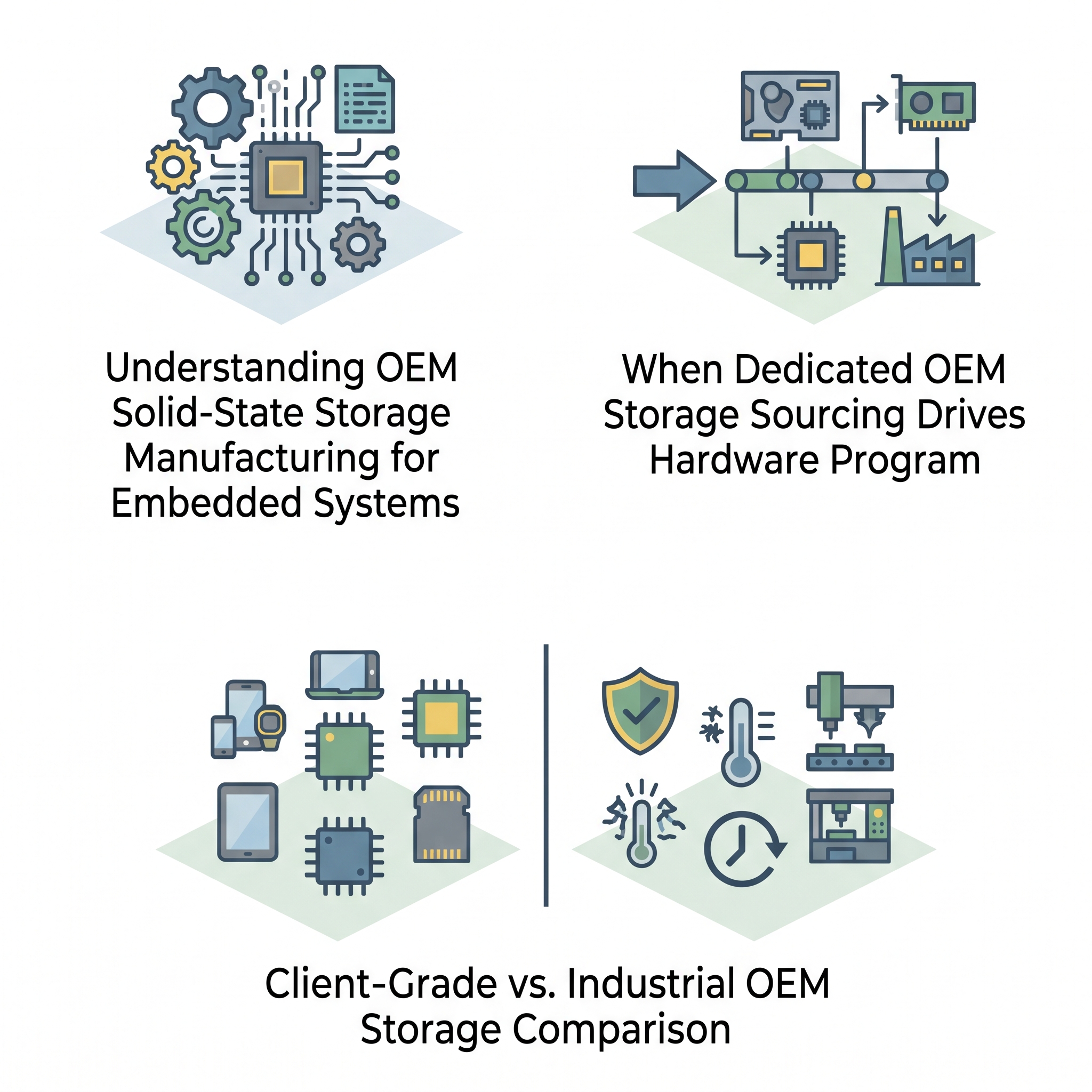
Understanding OEM Solid-State Storage Manufacturing for Embedded Systems

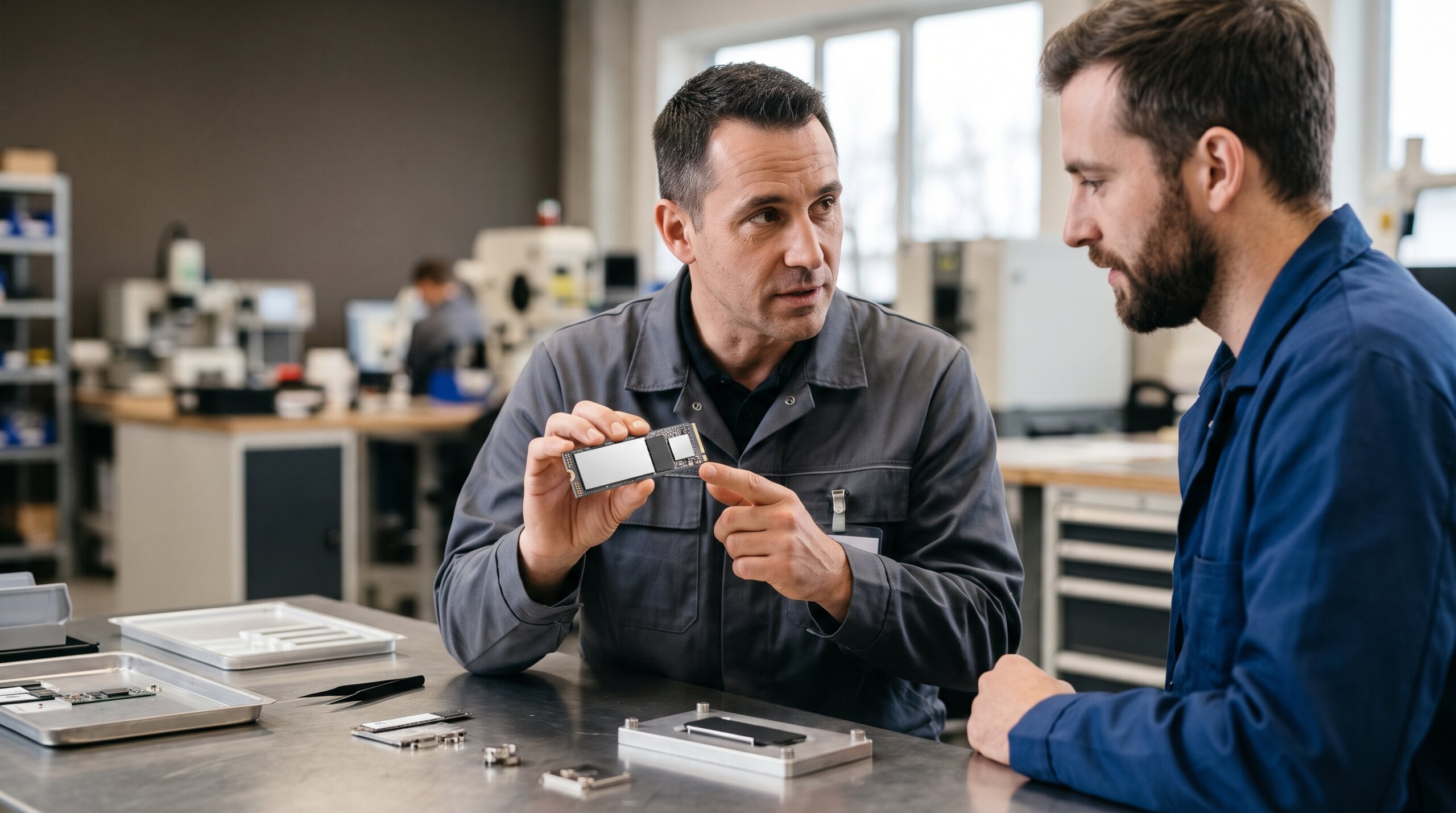
An original equipment manufacturer in the solid-state drive space designs, packages, tests, and supplies storage modules intended for direct integration into another brand’s finished equipment. Unlike consumer retail drives optimized purely for short bursts of peak read speed, an OEM storage assembly must satisfy strict requirements around sustained input/output, consistent thermal dissipation, and predictable lifecycle behavior.
Procurement managers sourcing embedded storage look at several tiers of production capability:
- Controller and Firmware Ownership: Whether the vendor develops proprietary controller firmware or relies on third-party reference code determines how quickly they can patch protocol incompatibilities or edge-case bugs.
- Flash Wafer and IC Sourcing: Industrial reliability depends on the grade of NAND flash die deployed on the printed circuit board. High-grade dies resist write endurance fatigue and data retention degradation under fluctuating temperatures.
- Physical Form Factor Adaptability: From conventional 2.5-inch SATA housings to M.2 2280, M.2 2242, mSATA, and custom embedded ball-grid arrays, hardware physical footprints vary dramatically across compute projects.
When evaluating a supplier’s core catalog, reviewing their specialized capabilities in solid state drive SSD production reveals whether their engineering focus matches ruggedized deployment standards.
When Dedicated OEM Storage Sourcing Drives Hardware Program Success
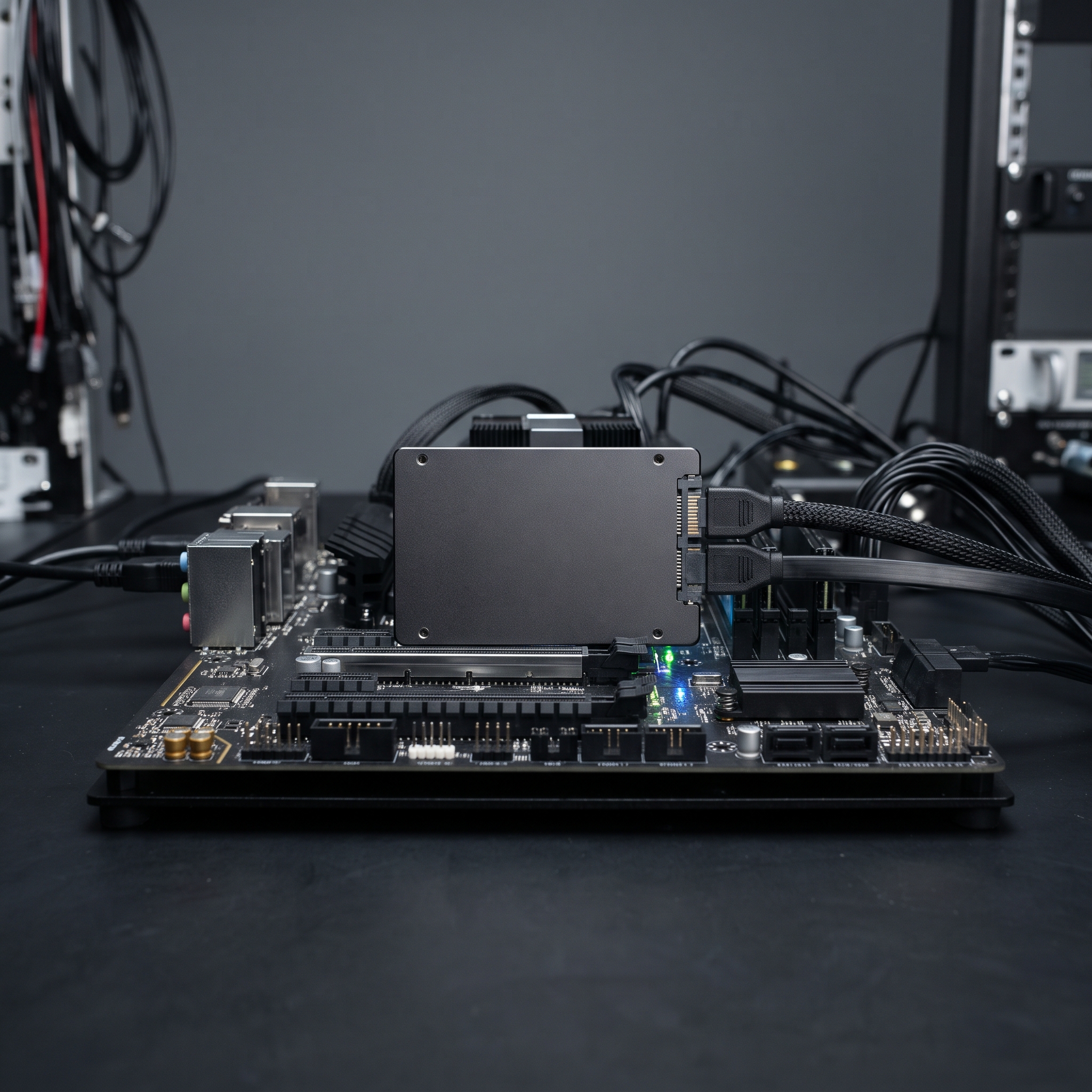
Selecting a specialized manufacturer becomes necessary when standard consumer supply chains introduce unacceptable operational and financial liabilities. Several distinct program conditions dictate direct collaboration with an original equipment maker:
1. Locked Bill of Materials (BOM) Requirements
In certified medical, transportation, or defense hardware, any alteration to an internal component invalidates regulatory clearances. Standard retail drives often change flash memory batches, controller revisions, or passive circuit components between production runs without warning. Direct relationships with storage manufacturers guarantee a locked BOM, ensuring that every drive received over multi-year production windows matches the exact silicon tested during initial qualification.
2. High-Vibration and Wide-Temperature Operating Environments
Hardware operating in roadside enclosures, factory automation cells, or avionics bays experiences severe environmental stress. Standard drives fail under prolonged heat cycling or mechanical vibration. Sourcing directly from an assembly facility allows buyers to require conformal coating, wide-temperature screening (-40°C to 85°C), underfill on critical ICs, and reinforced connectors.
3. Custom Form Factors and Embedded Media Co-Procurement
Many complex compute platforms rely on complementary flash media architectures. A system might use an internal high-speed drive for the primary operating system alongside secondary media for diagnostics or secure data transfer, such as bulk flash drives or industrial memory cards. Partnering with a manufacturer capable of producing aligned flash storage categories simplifies vendor management, qualification audits, and incoming quality checks.
Client-Grade vs. Industrial OEM Storage Comparison
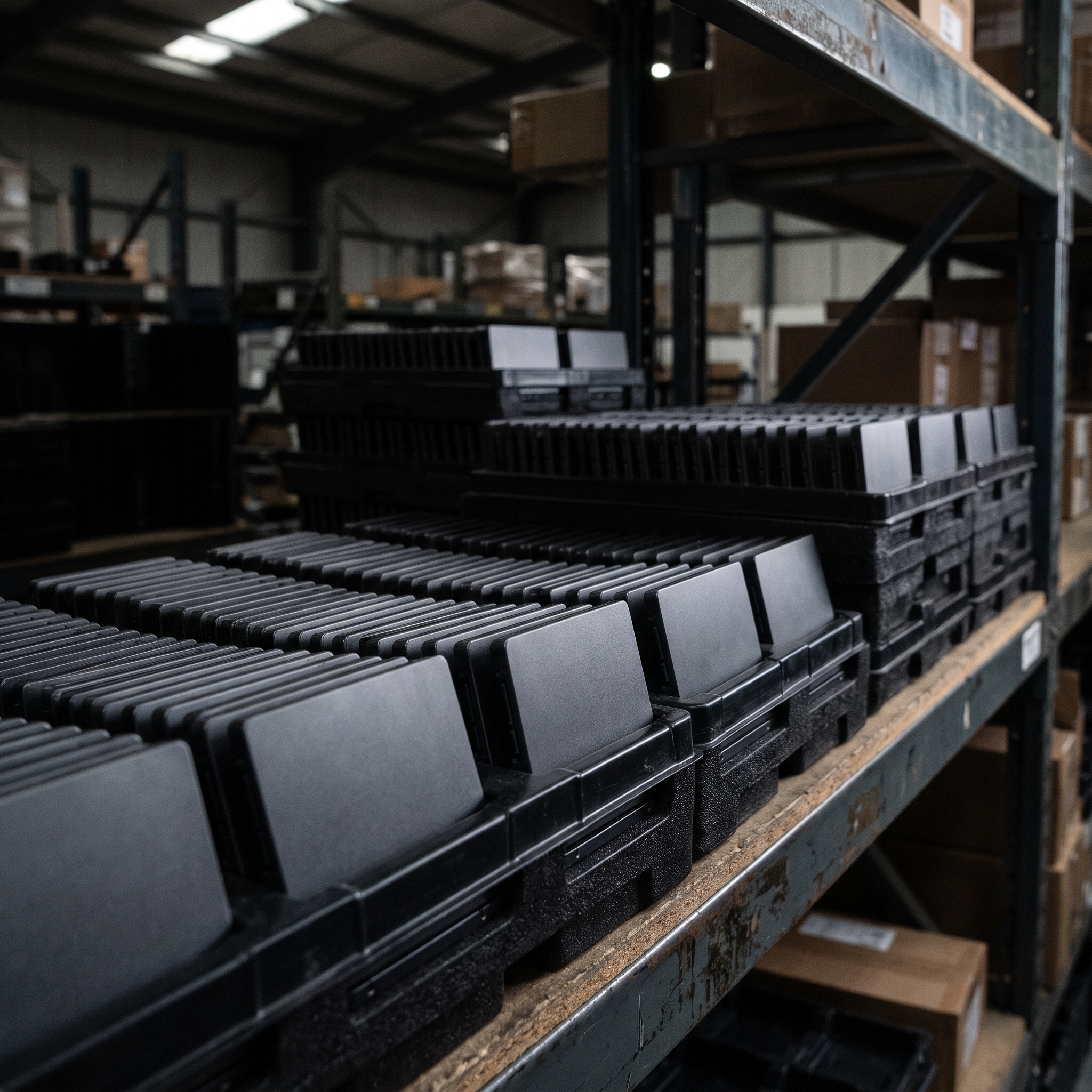
Understanding the architectural and operational differences between commercial retail storage and dedicated OEM embedded drives helps engineering teams specify the appropriate requirements early in procurement:
| Evaluation Parameter | Commercial / Client-Grade Drives | Dedicated OEM / Industrial Storage |
|---|---|---|
| Bill of Materials (BOM) | Unannounced component revisions common across batches | Formally locked BOM with advance PCN / EOL notifications |
| Operating Temperature | Standard operating range (typically 0°C to 70°C) | Wide-temperature screening available (-40°C to 85°C) |
| Power-Loss Protection | Basic firmware flush; vulnerable during instant drop | Hardware-based options (e.g., discrete capacitors) or tuned firmware flush |
| Workload Profile | Tuned for peak burst read/write consumer scenarios | Optimized for sustained steady-state input/output and endurance |
| Customization Support | Fixed standard form factors and stock firmware | Tailored firmware parameters, conformal coating, and custom physical form factors |
Step-by-Step Technical Evaluation Framework
Assessing prospective storage producers requires a repeatable, end-to-end vetting process. Procurement teams should execute this systematic evaluation before approving pilot production purchases.
Step 1: Silicon Provenance and Controller Architecture Audit
Begin by mapping the origin of the core building blocks. Inquire about:
- The tier and brand of raw NAND wafers utilized in the storage modules.
- Whether the flash components are packaged in-house or purchased pre-packaged.
- Controller options: DRAM-less architectures for low power and reduced cost versus DRAM-buffered controllers for intensive enterprise caching.
- Flash management algorithms: Wear leveling implementations, bad-block retirement thresholds, and proactive read disturbance mitigation.
Step 2: Firmware Customization and Feature Validation
Firmware governs how the drive interacts with host operating systems. Verify that the supplier’s engineering team can tune firmware parameters to match the system host environment:
- Power-Loss Protection (PLP): Determine whether hardware-level tantalum capacitors or firmware flush routines protect data in transit when abrupt power outages occur.
- Write Amplification Control: Request documentation on garbage collection behavior during write-heavy workloads to verify steady-state performance.
- Custom SMART Telemetry: Ensure the firmware exposes the precise drive health attributes your host monitoring software needs to predict wearout.
Step 3: Reliability Screening and Factory Quality Procedures
Touring or auditing the production facility—either through remote verification protocols or third-party audits—validates actual quality controls. Look for automated optical inspection (AOI), X-ray testing for ball grid array integrity, thermal shock cycling, and long-term burn-in chambers. Inquire about ongoing reliability test (ORT) sample frequencies from active assembly lines.
Step 4: Sample Testing and Host System Compatibility Matrix
Procure engineering samples across multiple production lots. Subject the drives to automated power-cycling stress tests, thermal chamber testing, and protocol conformance analyzers. Hardware engineers must verify that sleep state transitions, cold-boot detection, and bus negotiation perform flawlessly across the host platform’s BIOS and kernel revisions.
Step 5: Lifecycle Management and End-of-Life (EOL) Policy Review
A solid technical drive is worthless if discontinued halfway through your hardware product’s market life. Require clear, written EOL policies. A dependable partner provides formal Product Change Notifications (PCN) six months prior to component changes, along with last-time-buy (LTB) windows and roadmaps for drop-in replacement designs.
Common Pitfalls in Storage Vendor Selection
Procurement and engineering teams frequently encounter expensive hurdles when evaluating flash storage partners. Avoiding these common mistakes preserves project margins and reliability:
- Relying Exclusively on Datasheet Peak Speeds: Consumer-oriented promotional metrics highlight sequential burst speeds on empty drives. Industrial workloads depend on sustained steady-state write speeds after the drive enters steady garbage-collection mode. Always evaluate dirty-drive benchmarks.
- Overlooking Silent Silicon Revisions: Sourcing from brokers or unverified suppliers risks receiving drives with identical model numbers that contain different controller steppings or NAND generations, causing silent field failures.
- Ignoring Thermal Throttling Curves: High-speed NVMe modules produce substantial heat. If an enclosure lacks active airflow, an aggressive thermal throttling curve can slow system throughput to unusable levels. Verify drive thermal design power (TDP) under full load.
- Treating Commercial Warranty as System-Level Assurance: A consumer warranty replaces a defective drive by mail. For hardware builders, replacing a failed drive incurs field service labor, shipment logistics, and brand reputation loss. Quality must prevent failures upfront.
An Illustrative Scenario: Outdoor Industrial Integration
Consider an illustrative scenario: An engineering design firm begins developing an automated outdoor inspection console intended for unattended deployment across varied regional climates. The technical team specifies an embedded compute board paired with an M.2 storage drive to store high-resolution image logs and boot a customized real-time operating system.
During the early hardware phase, the team considers buying off-the-shelf retail storage modules to accelerate pilot builds. However, initial temperature chamber runs show intermittent drive recognition failures during freezing cold-boot sequences, alongside severe throttling during peak summer heat cycles.
Recognizing the risk of field dispatches, the procurement lead shifts strategy to qualify OEM SSD manufacturers capable of delivering customized, wide-temperature hardware. The engineering group issues a comprehensive technical request covering locked BOMs, tantalum-capacitor power loss protection, and conformal coating to protect against condensation.
By engaging directly with an experienced production facility, the team obtains sample units configured with custom firmware tuned to prioritize boot stability over burst speed. The manufacturer provides formal PCN documentation guaranteeing that the NAND configuration and controller firmware will remain locked across the planned production timeline, allowing the engineering firm to validate compliance once without fear of mid-cycle supply shifts.
Building a Sustainable Supply Partnership
Securing dependable embedded solid-state storage requires balancing engineering requirements, quality controls, and supply chain accountability. Procurement leaders who evaluate controller design, factory testing routines, and firmware flexibility safeguard their hardware investments against unexpected field failures.
For systems requiring diverse flash integration—spanning primary system drives, auxiliary microstorage, or external distribution media—partnering with an experienced manufacturing organization streamlines development. Review our background about us to learn how specialized engineering support protects project timelines. When you are ready to evaluate engineering samples or discuss locked-BOM requirements for upcoming production builds, contact our engineering team directly through our contact us portal.
Frequently Asked Questions (FAQ)
What is the primary difference between client-grade and OEM industrial SSDs?
Client-grade drives are built for standard commercial PC usage, operating within standard temperatures (typically 0°C to 70°C) with components that can change without notice. OEM industrial SSDs offer locked bills of materials (BOM), wide-temperature screening (-40°C to 85°C), hardware or advanced firmware power-loss protection, and extended lifecycle support with formal advance notifications.
Why is a locked Bill of Materials (BOM) essential for hardware manufacturers?
A locked BOM guarantees that the NAND flash, controller, firmware, and PCB passives remain strictly identical across all production batches. This consistency avoids unannounced silicon changes that could cause driver incompatibilities, thermal issues, or regulatory re-certification delays in embedded equipment.
How does hardware-based power-loss protection work on OEM solid-state drives?
Hardware-based power-loss protection uses onboard energy storage components, such as discrete tantalum capacitors, to provide reserve electrical power during an unexpected power drop. This enables the controller to complete in-flight write operations and flush volatile DRAM cache contents safely into non-volatile NAND flash before shutting down.
Can OEM SSD manufacturers accommodate low-volume customized hardware runs?
Reputable OEM and ODM flash storage manufacturers offer tiered production and sampling programs tailored to industrial project scales. They work with system integrators to evaluate engineering samples and define firmware or form factor customizations that align with specific pilot and mass-production ramp schedules.