

An industrial micro SD card is often the weakest link in a drone. The aircraft can fly perfectly while the card drops frames, stops recording, or corrupts a day of survey images. Which micro SD card is best for drones depends on the work: aerial photography, video production, mapping and inspection each put a different load on the card. This guide explains the speed ratings that matter, how much capacity a mission needs, the reliability factors (temperature, write endurance, shock and vibration) that separate an industrial card from a consumer one, and recommended specifications by drone application.
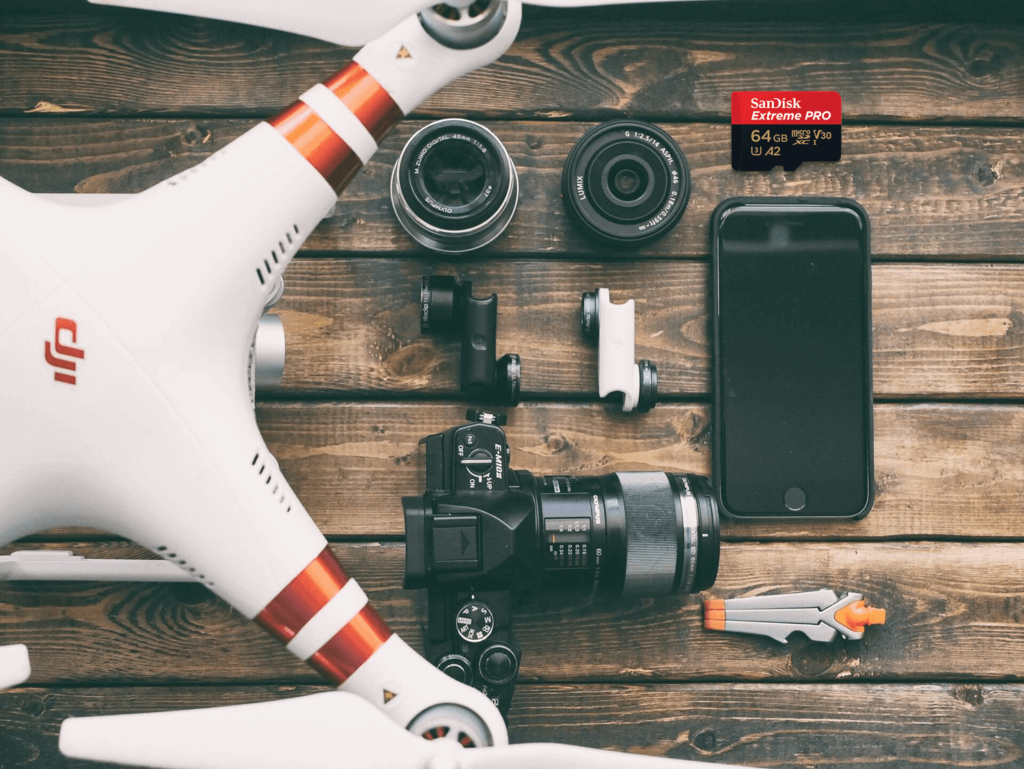
Why the Right microSD Card Matters for a Drone
Video and mapping need a constant write speed. If the card cannot sustain the camera’s data rate, the drone shows a “card too slow” error and stops recording, often mid-mission. The drone is fine, but the flight has to be repeated: more labor, battery cycles and permits, and sometimes a missed inspection window.
Consumer cards and professional drone storage can look identical, with the same capacity and similar speed labels. The difference is inside. Consumer cards are tuned for short bursts, such as a phone saving photos. Drone recording, mapping grids and inspection loops write continuously for a long time, which calls for controller firmware tuned for sustained writing, good thermal behavior and higher-endurance flash. Test every new card with a full-length recording before you use it on a paid job.
Speed Ratings for Drones: U3, V30 and V60
There is no single standard for drone cards; each drone maker publishes minimum requirements or a list of recommended cards, so start there. Most current drones call for a UHS-I card rated U3 or V30, and Class 10 is the lowest class to consider even for Full HD video.
- U3 and V30 both guarantee a minimum sequential write speed of 30 MB/s. The Video Speed Class (V6, V10, V30, V60, V90) was designed for video recording, so the V rating is the more relevant mark for a drone camera.
- V60 and V90 give headroom for high-bit-rate profiles, such as 5.1K or HDR video. For most 4K modes, V30 is enough.
- UHS-I vs UHS-II: most drones use a UHS-I interface. A UHS-II card works in them, but in flight it runs at UHS-I speed because the drone cannot use the card’s second row of pins. UHS-II mainly speeds up offloading in a compatible reader.
- “Up to” figures: a headline such as “up to 170 MB/s” usually describes peak read speed under ideal conditions, not the sustained write speed that recording depends on. Compare the V rating instead.
For a full explanation of speed and capacity classes, see how to choose the right SD card.
How Much Storage Capacity Does a Drone Need?
Size the card by mission length, not by the length of one flight.
- Video: multiply the camera’s bit rate in Mbps by 7.5 to get megabytes per minute. A 100 Mbps 4K profile writes about 750 MB per minute, or 45 GB per hour.
- Mapping and photogrammetry: multiply the number of images by the average file size. For example, 1,200 images of 30 MB each come to about 36 GB. Large sites and high-resolution or multispectral sensors fill a 64GB card quickly.
- Aerial photography: burst-based and usually light on storage.
As a starting point, 128GB suits short missions in controlled conditions, 256GB covers standard field operations, and 512GB or more helps on remote sites with limited chances to offload. Larger cards mean fewer swaps, but a single failure costs more data, so several medium-capacity cards are often safer than one very large card. Running out of space mid-mission forces a landing and a card swap in the field, which brings dust and handling risk.
microSDXC and the exFAT File System
Cards larger than 32GB are microSDXC and use the exFAT file system, which handles video files larger than 4GB without splitting them. A card in the wrong file system can cause split files, unreadable footage or recognition errors that look like hardware faults. Format the card in the drone before each critical mission. For the background, see SDHC vs SDXC.
Reliability Factors: Temperature, Endurance, Shock and Authenticity
Heat, Cold and Continuous Writing
A card that performs well on a desk can fail in the air. Winter flights and high altitude bring cold starts; summer flights bring sun exposure and heat from long recordings. Choose cards rated for a wide operating temperature range, and test them with a full-length recording in conditions like those of the job.
Write Endurance
Endurance is not only a concern for surveillance and dash cams. A drone that flies mapping or inspection missions every day writes a large volume of data each week, and flash cells endure a limited number of write/erase cycles. Consumer cards are tuned for speed rather than lifespan. For daily commercial flying, choose cards with an endurance rating or industrial-grade flash (SLC or MLC), even when the speed class is the same. See SLC vs MLC vs TLC vs QLC.
Shock and Vibration
A drone does not have to crash to stress its card. Motors vibrate throughout the flight, hard braking and yaw corrections create short G-force spikes, and every landing passes an impact through the airframe. The frame, landing gear and gimbal absorb much of it, but the storage still takes the rest. Speed ratings say nothing about mechanical strength: a V30 or V60 card can meet every throughput test and still be fragile.
When a card is sold as shockproof or shock-resistant, ask for measurable data:
- a shock rating in G, with the test conditions;
- the vibration test standard the card was tested to;
- the operating temperature range.
Treat these as red flags: no published test data or standards, no stated endurance or life guidance, and marketing aimed only at phones and consumer electronics. Before deployment, put sample cards through repeated insertions and normal flights, then run a full-capacity write and read verification.
Avoid Fake Cards
Unrealistically low prices, inconsistent packaging or serial numbers, and a capacity mismatch under testing all point to counterfeit cards. Buy from authorized suppliers, verify each lot with a full-capacity write test, and standardize on approved models. Our guide on how to spot and test a fake memory card covers the checks.
Recommended microSD Card Specs by Drone Application
Consumer media drones record short clips at high peak bit rates. Inspection and survey drones write continuously for long periods. Drones that record while running onboard processing add another load. Start from how the drone is flown, not from its brand or camera, and avoid a one-card-fits-all policy.
| Application | Recommended microSD card specs |
|---|---|
| Aerial photography | U3 / V30, standard endurance |
| Video production | V30 to V60, good thermal stability |
| Mapping, LiDAR, thermal and inspection | V30 or higher, high endurance, wide temperature range, documented shock and vibration data |
Why Consistent OEM-Grade Supply Matters for Drone Fleets
For commercial operators, consistency matters as much as performance. A change of controller or flash mid-project can change how a card behaves, even under the same label. OEM-grade supply focuses on a stable bill of materials across batches, long-term availability for multi-year projects, and consistent performance across a fleet. Standardize approved part numbers and suppliers, and ask suppliers how they control component changes.
Dellwa supplies genuine SanDisk and Kingston microSD cards in bulk and industrial microSD cards for OEM and fleet projects. See our industrial microSD card guide, our memory card range, and for vehicle recorders, choosing an SD card for a dash cam.
Frequently Asked Questions About microSD Cards for Drones
What is the minimum microSD card speed for drones?
Most drones require U3 or V30 for stable video recording. Check your drone maker’s recommended card list; lower classes often fail under sustained video load.
Is V30 enough for 4K drone video?
Yes, for most 4K modes. High-bit-rate or HDR profiles benefit from V60.
Do drones benefit from UHS-II microSD cards?
In flight, usually not, because most drones have UHS-I interfaces. UHS-II mainly speeds up offloading with a compatible reader.
Is a 256GB card too large for a survey drone?
Not if the drone supports microSDXC cards of that size. Calculate the mission’s data volume first, and weigh fewer card swaps against the amount of data at risk on one card.
How often should a drone microSD card be replaced?
For commercial use, review cards every 6 to 12 months, or sooner after heavy write cycles or any recording errors.
Can one microSD card be used across multiple drones?
Technically yes, but format the card in each drone before use and avoid mixing mission types on one card.
For bulk or industrial microSD cards for drone fleets, contact Dellwa with your drone models, capacity and quantity.