Selecting an Industrial Grade Wide Temperature SD Card for Demanding Systems
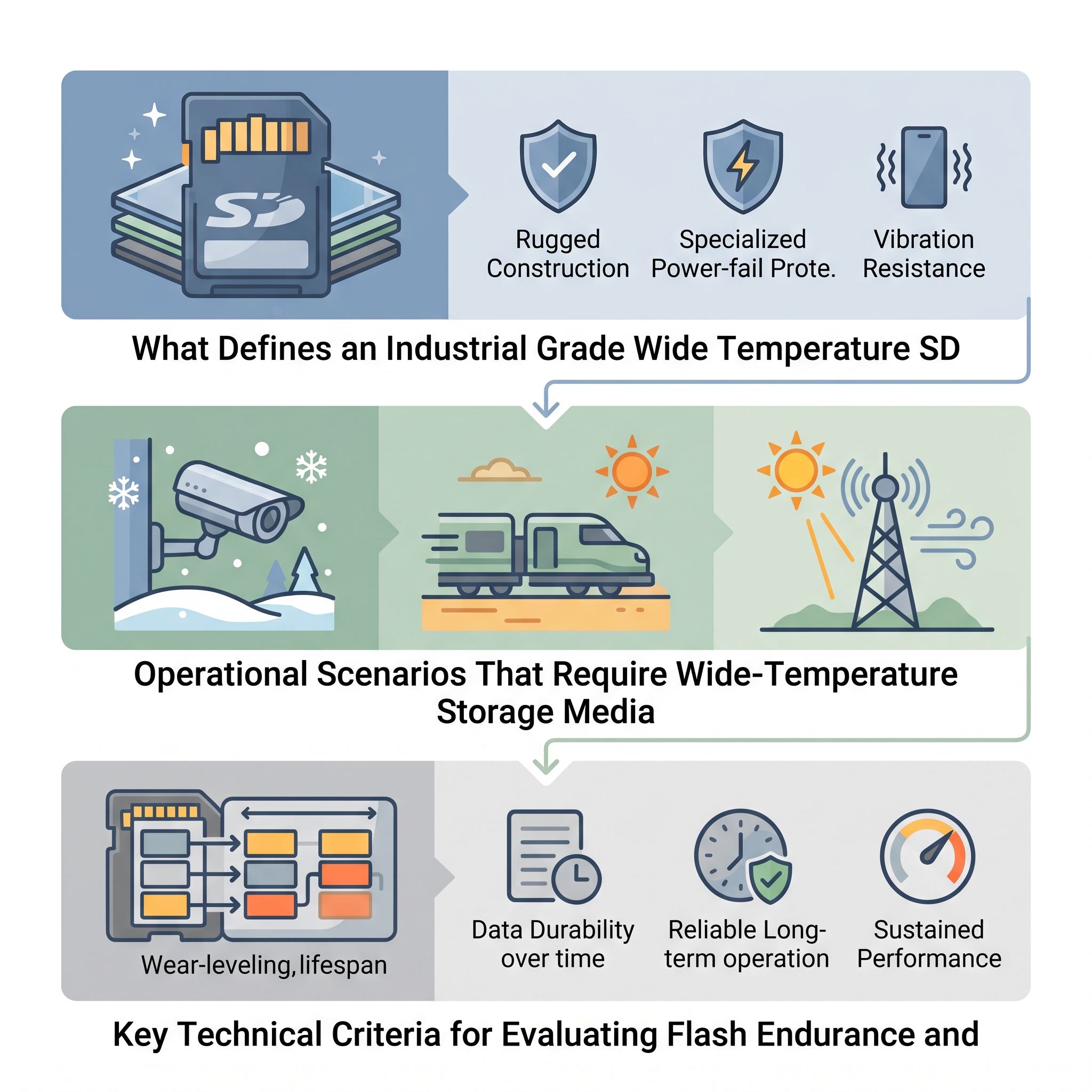
Embedded hardware engineers and procurement managers encounter serious risks when consumer removable storage is placed into field hardware. In mission-critical deployments, unverified flash media can fail unexpectedly, leading to corrupted file structures, device freezes, and costly field service calls. Choosing an industrial grade wide temperature sd card demands a granular evaluation of physical media durability, controller logic, and silicon behavior across extreme environmental fluctuations.
Industrial storage solutions differ fundamentally from consumer options found in retail channels:
- Design Priority: Consumer media prioritizes maximum density at low unit cost, whereas industrial cards focus on data retention, deterministic write endurance, and mechanical stability.
- Environmental Resilience: Industrial storage withstands continuous thermal cycling, shock, and electrical disturbances.
- Supply Assurance: Industrial deployments require locked specifications to ensure identical performance across multi-year production lifecycles.
Evaluating these parameters before deployment protects embedded systems against unexpected operational downtime.
What Defines an Industrial Grade Wide Temperature SD Card
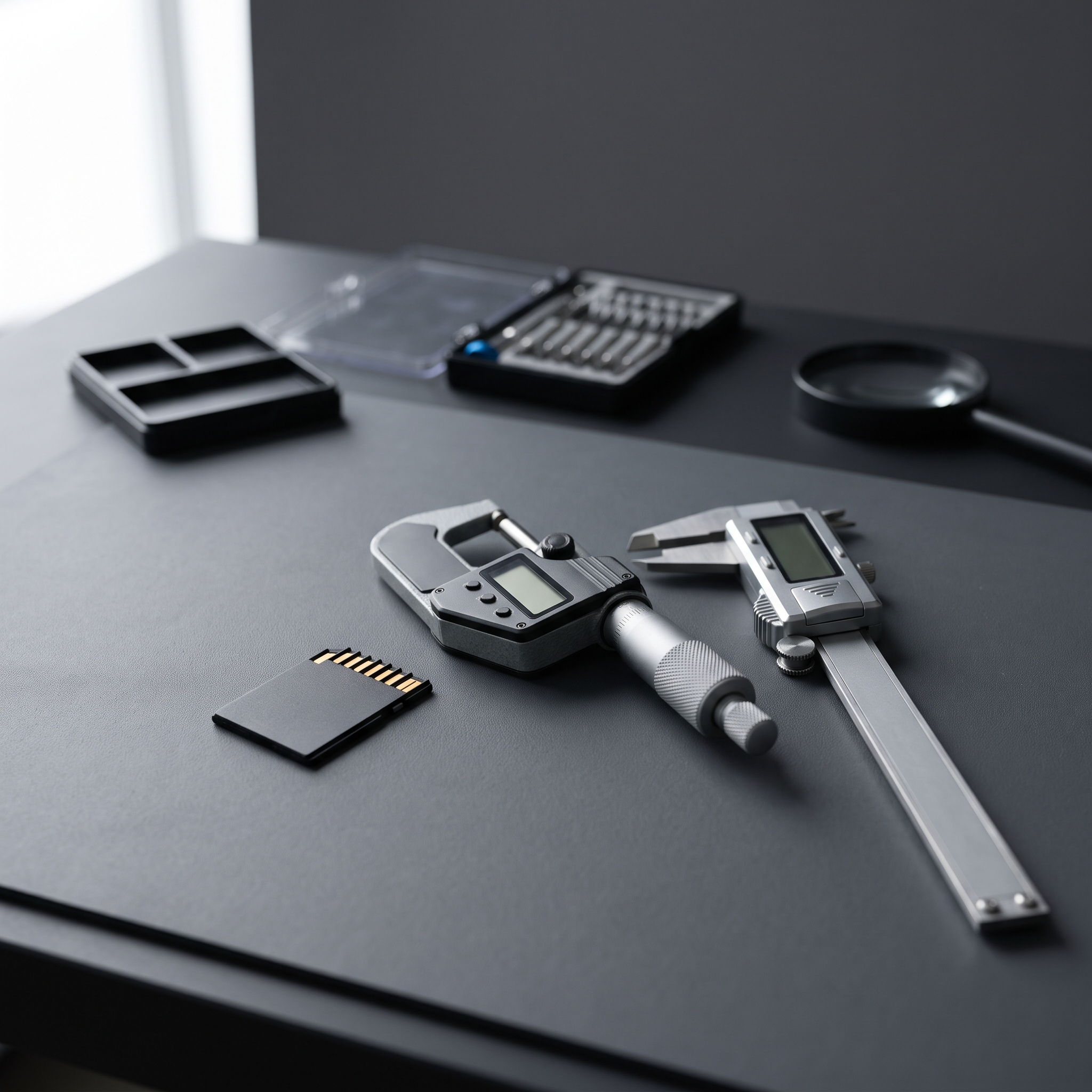
The fundamental boundary separating consumer flash products from an industrial grade wide temperature sd card is operating temperature tolerance, silicon packaging, and configuration control.
Industrial vs. Consumer Operational Characteristics
| Parameter | Consumer Storage Media | Industrial-Grade Storage Media |
|---|---|---|
| Standard Temperature Range | 0°C to 70°C (commercial standard) | -40°C to 85°C (extended wide-temperature) |
| Bill of Materials (BOM) | Uncontrolled; dies and controllers change silently | Strictly locked; governed by Product Change Notifications (PCN) |
| Substrate & Packaging | Standard packaging prone to thermal fatigue | Industrial resin compounds resistant to delamination and thermal shock |
| Error Management | Basic ECC tuned for moderate read workloads | Multi-stage LDPC engines with active read refresh and disturbance scanning |
| Data Retention | Rapid charge leakage under sustained heat | Compensated charge-state tracking engineered for elevated thermal exposure |
This broad thermal window influences physical packaging and semiconductor layout. At sub-zero temperatures, electron transport dynamics shift, affecting the read and write thresholds of individual flash memory cells. When operating at high temperatures, electrical leakage increases, accelerating charge decay and raising raw bit error rates. Flash media built for extreme conditions integrates specialized silicon substrates and industrial packaging compounds designed to resist package delamination, thermal fatigue, and structural solder joint failure caused by ongoing thermal expansion.
Furthermore, the bill of materials for industrial media is fixed. Consumer retail cards frequently alter underlying NAND flash generations or memory controller revisions without changing model numbers or informing buyers. In industrial procurement, suppliers maintain controlled engineering specifications so that validated qualification testing remains representative throughout a multi-year project lifespan.
Operational Scenarios That Require Wide-Temperature Storage Media
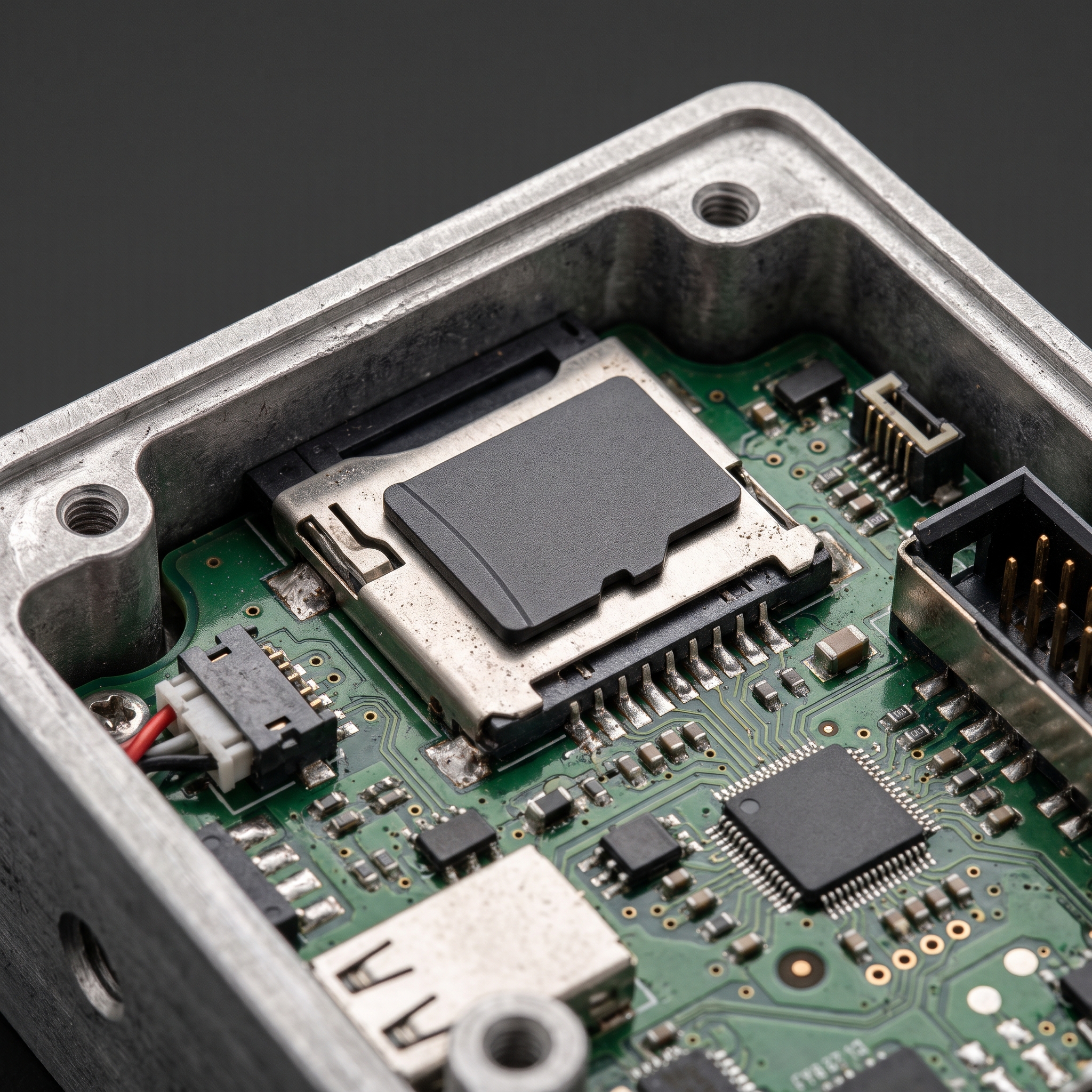
Thermal stress on embedded flash media rarely comes from ambient weather alone; internal heat dissipation within tightly sealed enclosures often increases local operating temperatures dramatically.
- Outdoor Edge & Infrastructure Nodes: Remote edge computing gateways, surveillance cameras, weather stations, and solar-powered cellular units operate inside sealed enclosures exposed to direct solar radiation in summer and sub-zero cold in winter. Internal temperatures inside a fanless chassis can easily exceed 60°C even in moderate ambient conditions.
- Automotive & In-Vehicle Telematics: In-vehicle event recorders, telematics gateways, electronic logging systems, and roadside monitoring sensors endure continuous engine bay heat, solar radiation through windshields, vibration, and sudden system shutdowns.
- Factory Automation & Industrial Machinery: Programmable logic controllers (PLCs), robotic monitoring terminals, and human-machine interface (HMI) units run in enclosed factory cabinets alongside high-voltage motors, dust, and electrical noise. Deploying dedicated memory cards built to industrial operational ratings ensures that production logs, telemetry data, and control code remain accessible throughout years of continuous machinery operation.
Key Technical Criteria for Evaluating Flash Endurance and Controller Firmware
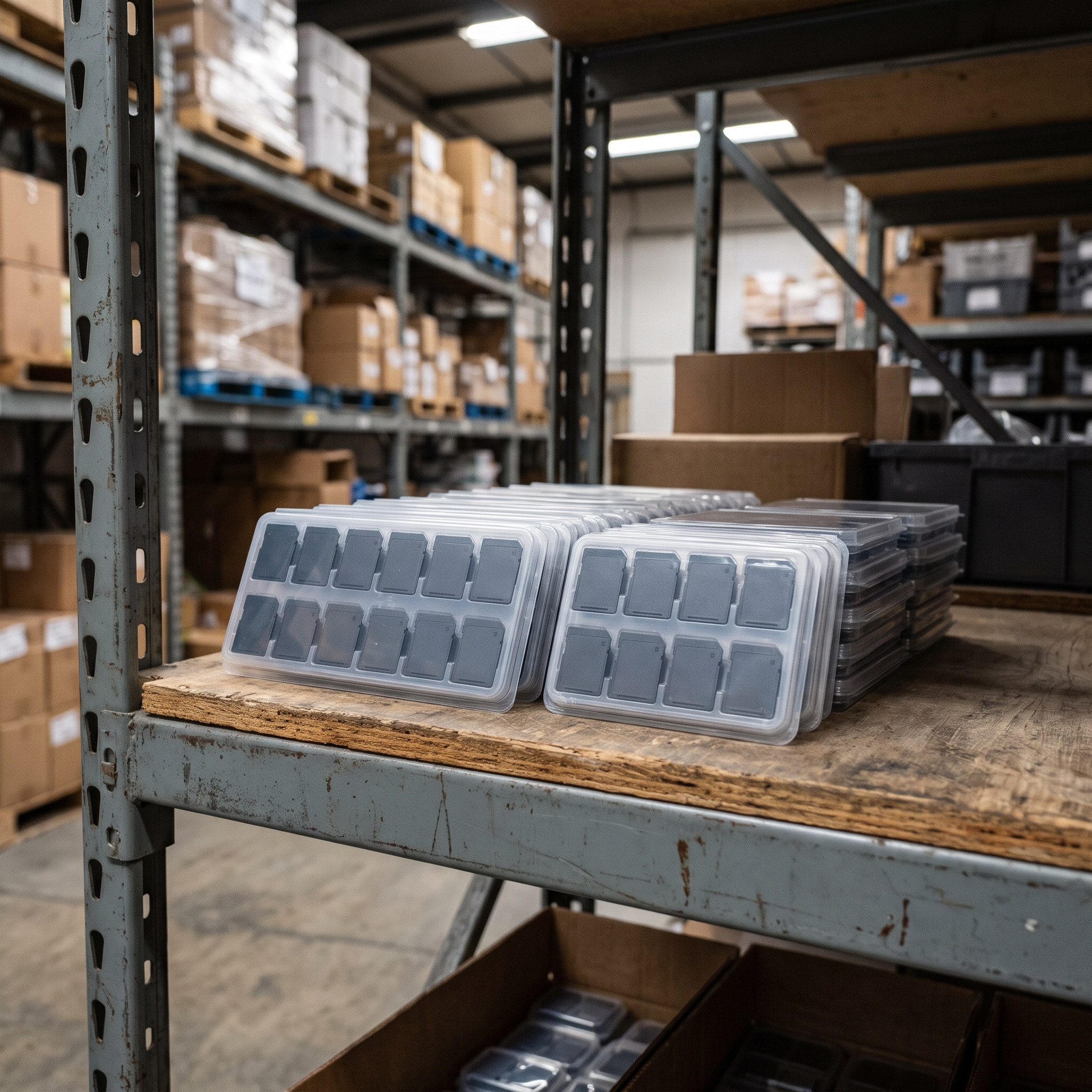
Selecting appropriate storage requires looking beyond capacity ratings to assess internal silicon endurance, cell architectures, and controller sophistication. Flash memory wears out with each program and erase cycle, and extreme temperatures accelerate physical degradation.
NAND Cell Architecture Comparison
| Flash Architecture | Bits per Cell | Relative Endurance (P/E Cycles) | Cost Profile | Best Use Scenarios |
|---|---|---|---|---|
| SLC (Single-Level Cell) | 1 | ~60,000 to 100,000 | Premium | Mission-critical boot drives, high-frequency continuous telemetry |
| pSLC (Pseudo-SLC) | 1 (in MLC/TLC die) | ~20,000 to 30,000 | Mid-range | High-write embedded systems requiring balanced cost and endurance |
| MLC (Multi-Level Cell) | 2 | ~3,000 | Moderate | General industrial logging with moderate write frequency |
| TLC (Triple-Level Cell) | 3 | ~1,000 to 3,000 | Cost-effective | Read-intensive operational environments with infrequent writes |
Single-Level Cell flash offers superior endurance, high noise margins, and low susceptibility to thermal disturbance. While MLC and TLC options offer higher storage density at lower price points, raw endurance decreases significantly. For budget-sensitive systems that require higher endurance than standard TLC provides, pseudo-SLC modes configure multi-level cells to record single bits, raising write endurance and write speeds well above baseline multi-bit operations.
Essential Controller Firmware Capabilities
- Advanced Error Correction Code (ECC): Modern industrial controllers utilize Low-Density Parity-Check (LDPC) decoding engines to recover distorted bit states caused by thermal leakage or high program/erase cycles.
- Dynamic and Static Wear Leveling: Flash controllers distribute write cycles across all available physical blocks, ensuring static system files do not monopolize fresh cells while operational log writes burn out localized sectors.
- Read Distribute and Read Refresh: Frequent read operations at high temperatures can cause electrical disturb effects in neighboring unread cells. Controller firmware periodically scans and rewrites marginal blocks before uncorrectable data errors develop.
- Health Telemetry Reporting: Industrial media supports SMART monitoring protocols, allowing system administrators to check remaining block endurance, spare sector allocations, and operational temperatures remotely.
Hardware-Based Power-Loss Protection
Industrial equipment faces unexpected power disconnects, brownouts, and emergency shutoffs. If an unmanaged power cut occurs during a write operation, in-flight data in volatile controller memory can be lost, and the card’s master boot record or file allocation tables can become corrupt.
- Voltage Sensing: Dedicated circuits detect primary voltage drops below critical thresholds in milliseconds.
- Capacitor Hold-Up: Onboard hardware capacitors provide temporary reserve power.
- Safe Buffer Flush: Controller firmware halts incoming host commands, flushes in-flight cache, and safely updates metadata tables before total power cessation.
Step-by-Step Selection Workflow for Industrial Embedded Systems
Procurement and engineering teams should establish a structured workflow to confirm that candidate flash media aligns with operational, environmental, and architectural demands before initiating volume rollouts.
Step 1: Calculate Real-World Daily Write Workloads
Begin by auditing the exact volume of data the host operating system writes daily. Determine whether incoming telemetry consists of continuous streaming writes or fragmented burst logs. Continuous sequential writing places predictable stress on memory blocks, whereas high-frequency random writes amplify wear via high write amplification factors (WAF). Calculating the required terabytes written over the hardware target lifespan reveals the minimum endurance profile needed.
Step 2: Establish Host Device Interface Specifications
Examine electrical compatibility, host bus configurations, and form-factor requirements. Embedded systems may utilize standard SD, microSD, or integrated solid-state interfaces. When higher transfer rates or unified storage protocols are needed alongside card-based logging, system architects often cross-evaluate peripheral options with solid-state drive SSD integrations to balance boot performance, storage density, and modular replacement needs across system builds.
Step 3: Run Environmental Qualification and Shock Testing
Subject pre-production test units to environmental stress screening inside thermal chambers:
- Sub-Zero Cold Tests: Sustained read and write execution at -40°C.
- Thermal Shock Cycling: Rapid transitions across temperature extremes (-40°C to 85°C).
- High-Temperature Burn-In: Continuous operation at 85°C to measure bit leakage rates.
- Power Cut Immunity: Abrupt power interruptions during active write loops to verify journaling resilience.
Step 4: Audit Supplier Consistency and Change Management
In industrial manufacturing, product consistency is critical. Procuring consumer storage carries the risk of silent revisions, where component vendors replace internal controllers or flash dies without updating outward part numbers. Verify that prospective storage suppliers maintain locked bill of materials (BOM) agreements and formal Product Change Notification (PCN) policies. A verified manufacturing roadmap guarantees that parts validated during system design remain identical throughout multi-year production runs.
Frequently Asked Questions
What causes standard memory cards to fail quickly in outdoor hardware?
Standard consumer cards are rated for operating temperatures between 0°C and 70°C. In outdoor enclosures exposed to direct sunlight or sub-zero freezes, temperatures easily drift outside these boundaries. Cold environments can prevent flash memory gates from programming cleanly, while heat accelerates charge loss inside memory cells. These stresses generate excessive bit errors that overwhelm consumer controllers, causing read-only lockouts or filesystem corruption.
How does pseudo-SLC compare to native SLC for industrial applications?
Native SLC stores a single bit per cell using thick gate oxide layers, offering the highest operational endurance and environmental resilience available in NAND flash. Pseudo-SLC operates multi-level or triple-level cells in a single-bit mode via specialized controller firmware. This configuration increases write speeds, extends endurance well beyond baseline multi-bit flash, and reduces costs compared to pure SLC, making it a balanced choice for many demanding embedded deployments.
Why is a locked bill of materials critical for industrial procurement?
A locked bill of materials ensures that the memory controller, NAND flash silicon, circuit layout, and firmware build remain completely unchanged throughout the procurement lifecycle. If a supplier alters internal parts without notice, previously qualified operating system drivers, boot routines, and power failure recovery thresholds may perform unpredictably, introducing field risks into established equipment lines.
What steps prevent file system corruption during unexpected power cuts?
Industrial flash hardware combines controller-level firmware journaling with fast voltage detection circuits. When input power drops unexpectedly, the card halts incoming host commands and uses stored charge from onboard decoupling capacitors to write cached metadata into non-volatile blocks. This sequence protects the file structure from corruption and ensures the card mounts normally upon reboot.
Reliable Supply Partnerships for Industrial Storage
Maintaining reliability across long product lifecycles requires both proven technical specifications and a disciplined supply chain. Engineering teams need predictable access to validated flash storage, guaranteed component sourcing, and clear change management protocols.
For enterprise equipment manufacturers, partnering with an established supplier capable of handling custom firmware adjustments, controlled manufacturing processes, and rigorous quality inspection mitigates long-term operational risks. For inquiries regarding application-specific endurance validation or to review customized hardware solutions, teams can contact us directly to evaluate project requirements and technical specifications.