How Buyers Choose Wholesale SSD Solutions for Enterprise and OEM Projects
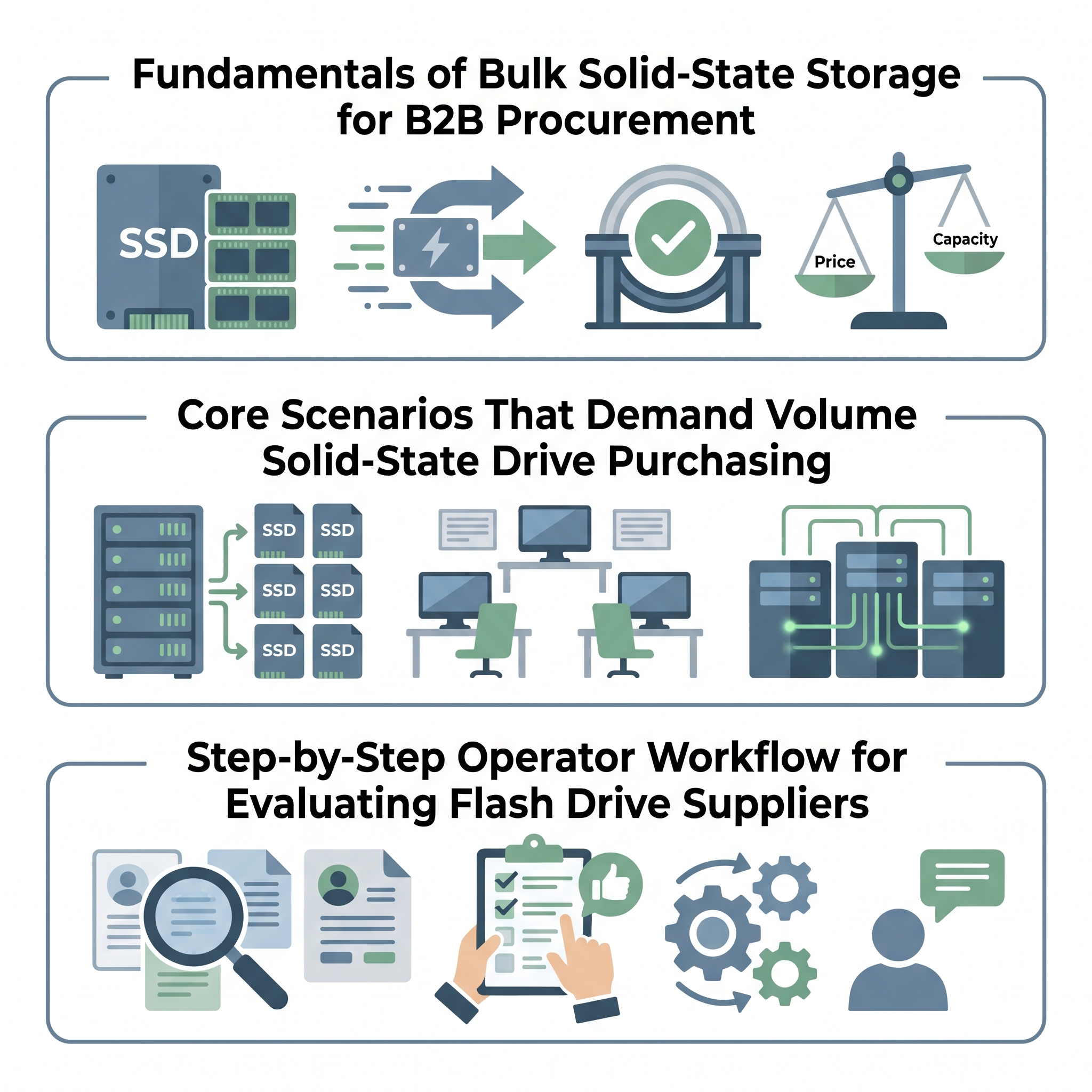
Fundamentals of Wholesale SSD for B2B Procurement
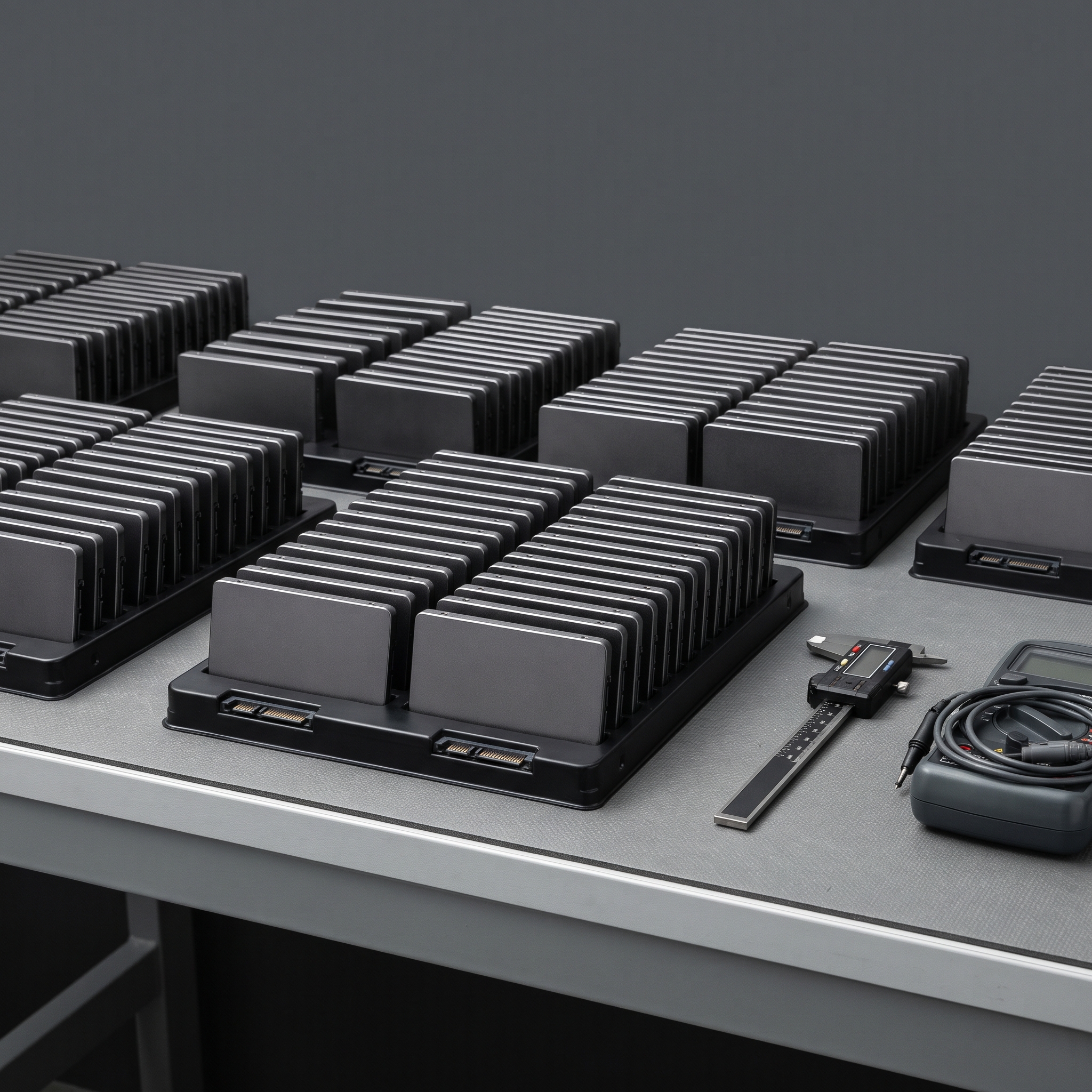
Procurement teams face distinct challenges when purchasing storage media in volume compared to single-unit consumer buying. In commercial supply chains, ordering wholesale SSD inventory requires evaluating component stability, controller configurations, flash NAND tiers, and sustained write endurance rather than simply comparing headline read speeds on a retail box. B2B operations rely on consistent batches to prevent firmware discrepancies, integration failures, and field replacements across distributed deployments.
When purchasing solid-state drives in bulk quantities, buyers look beyond unit price. An enterprise storage transaction involves verifying the underlying Bill of Materials (BOM). Consumer retail drives frequently cycle through revised controller revisions or alternative NAND flash lots without updating the external model SKU. In contrast, dedicated commercial sourcing demands fixed BOM agreements. A stable BOM guarantees that every unit across a shipment shares identical hardware and firmware attributes, preventing integration issues in sensitive server racks, embedded automation units, or branded client configurations.
Furthermore, sourcing bulk storage intersects with standard memory components in modern electronic manufacturing. Engineering teams selecting high-reliability drives often review complementary form factors such as memory cards or specialized modules to support peripheral boot drives and industrial data logging. A clear understanding of raw flash grades, controller architecture, and sustained operational parameters forms the foundation of reliable volume purchasing.
Core Scenarios That Demand Volume Solid-State Drive Purchasing
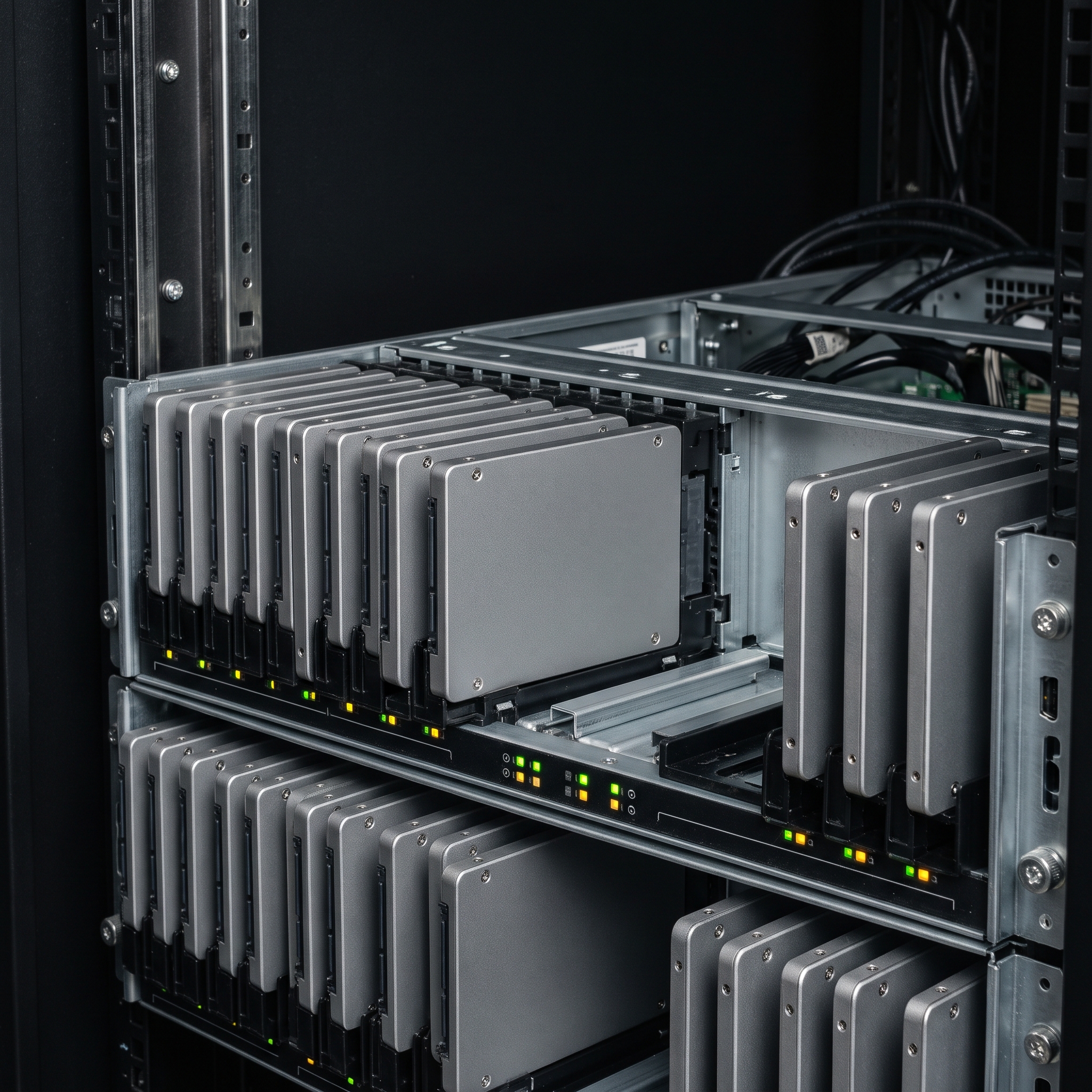
Volume procurement decisions for solid-state storage arise across specific commercial situations, each with unique technical constraints and operational priorities.
OEM and Embedded Hardware Manufacturing
Original equipment manufacturers integrating flash media into medical devices, industrial computing hardware, point-of-sale terminals, or automation machinery require predictable baseline performance. In these environments, an unexpected drive failure or firmware freeze can take an entire production line offline. Procurement teams in these projects evaluate endurance ratings, operating temperature thresholds, and formal change notification policies before placing bulk purchase orders.
Data Center Upgrades and System Integration
System integrators building localized private cloud infrastructure, network-attached storage clusters, or high-throughput compute nodes purchase storage media in volume to standardize maintenance routines. Uniform configurations ensure identical drive behavior under parity rebuilds, thermal constraints, and RAID controllers. Sourcing consistent drives simplifies spare parts management and warranty servicing across expansive data server fleets.
Commercial Wholesale and Retail Distribution
Wholesale distributors supplying regional repair centers, enterprise IT departments, and retail channels require steady volume to maintain stock continuity. These operations prioritize reliable production schedules, dependable packaging options, and recognized product standards to avoid inventory shortages. Sourcing managers in this tier coordinate with specialized vendors capable of supplying certified solid-state drive SSD options alongside high-volume mobile media such as bulk SD inventory.
Step-by-Step Operator Workflow for Evaluating Flash Drive Suppliers
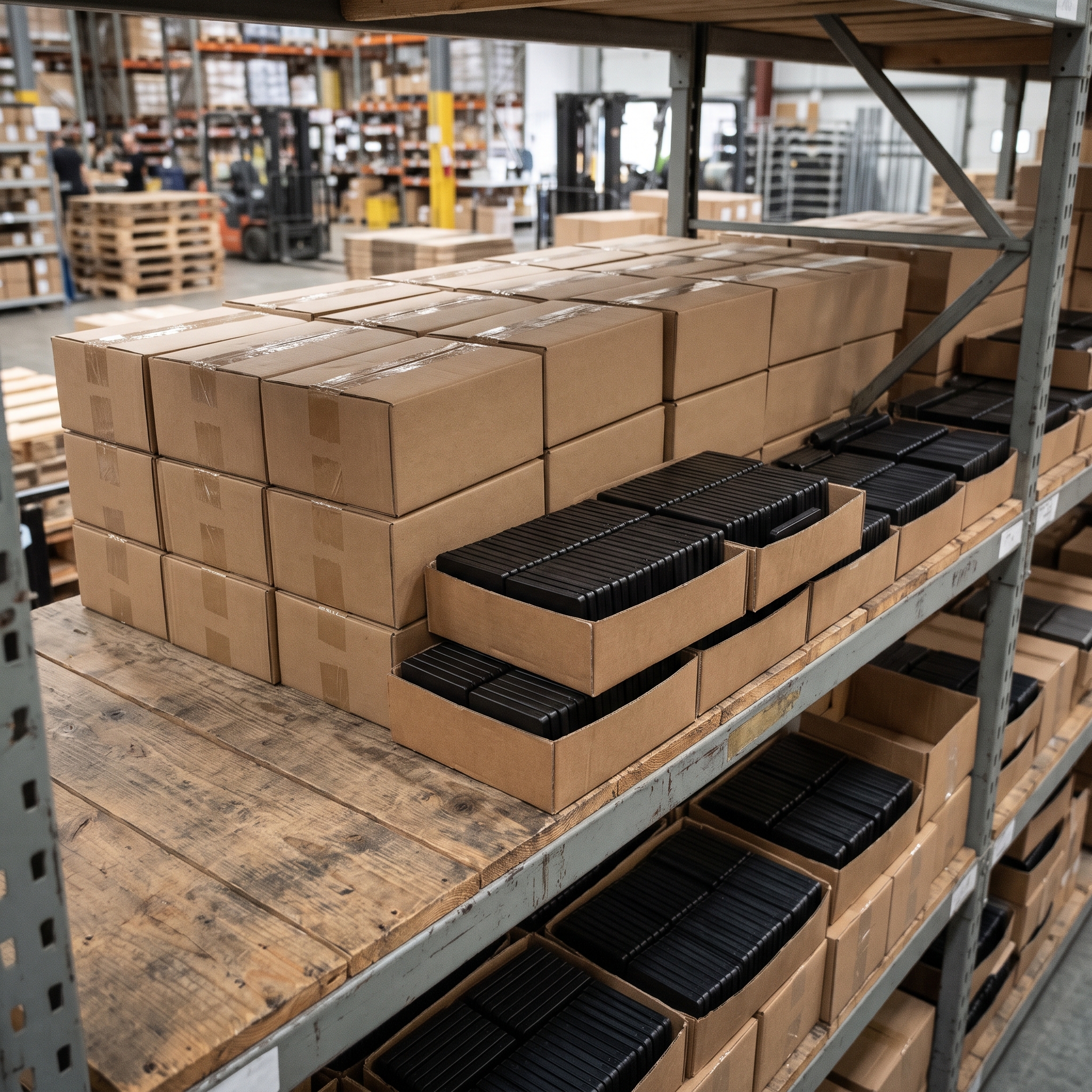
Executing a structured procurement process prevents delivery delays, hardware mismatches, and unexpected field failures. Enterprise buyers use a methodical evaluation sequence to qualify both the vendor and the physical product before issuing purchase orders.
Step 1: Define Technical Workloads and Interface Requirements
Before requesting supplier quotes, technical procurement officers determine the target application profile:
- Interface and Form Factor: Determine whether the deployment requires 2.5-inch SATA III, M.2 NVMe (PCIe Gen 3 or Gen 4), or specialized embedded modules.
- Workload Profile: Clarify read-heavy versus write-heavy duty cycles. Enterprise operating systems require higher endurance profiles compared to simple client boot disks.
- Environmental Tolerance: Confirm operating ambient temperatures, particularly for industrial automation or unventilated enclosures.
Step 2: Establish Bill of Materials Controls and Sample Qualification
Once candidate suppliers offer suitable options, the procurement team must obtain engineering samples from active production lines. Buyers evaluate these samples under simulated operational stress to verify sustained throughput and thermal throttling behavior. During this phase, buyers request a formal locked-BOM agreement, ensuring the manufacturer does not alter the NAND flash die supplier or memory controller silicon without formal engineering change notifications.
Step 3: Audit Production Capabilities and Quality Assurance Processes
Reliable flash storage manufacturing depends on meticulous quality control at the wafer, packaging, and assembly stages. Sourcing managers evaluate supplier quality frameworks, looking for automated surface-mount assembly, comprehensive burn-in testing, and electrostatic discharge protocols. Working with an experienced manufacturer that offers end-to-end service and custom firmware adaptation provides additional protection against compatibility defects.
Step 4: Finalize Commercial Terms, Lead Times, and Buffer Agreements
Flash memory pricing fluctuates according to raw silicon supply and global demand trends. Sourcing agreements must detail lead times, minimum order quantities, shipping protocols, and return material authorization policies. Sophisticated buyers negotiate rolling forecasts with safety stock buffers to shield their production schedules from unexpected supply crunches.
Critical Pitfalls to Avoid in Volume Storage Procurement
Volume flash storage procurement carries risks that can disrupt production lines and erode operational margins. Sourcing managers must guard against several recurring procurement errors.
- Prioritizing Low Unit Price Over Controller Quality: Inexpensive bulk drives often achieve lower price points by utilizing low-tier memory controllers lacking internal thermal protections or robust error-correcting code algorithms. These drives may present acceptable initial benchmark scores but experience rapid performance degradation or high failure rates under sustained operating loads.
- Overlooking Unannounced Component Swaps: Sourcing generic retail inventory in volume carries the hidden risk of rolling component revisions. A manufacturer might swap the original controller or use higher-density NAND cells in a subsequent production run while keeping the exact same model number, introducing severe kernel incompatibilities into enterprise operating environments.
- Ignoring Sustained Write Realities: Datasheets often emphasize burst read speeds achieved through temporary SLC cache allocations. Once that internal cache fills during continuous enterprise write operations, drive performance drops to native flash speeds. Sourcing managers must evaluate steady-state endurance and sustained write curves rather than short-burst synthetic benchmarks.
- Failing to Verify Real Warranty and RMA Pipelines: A multi-year replacement promise has little practical value if the supplier lacks localized logistics support, clear RMA triage procedures, or dedicated engineering assistance to investigate catastrophic failures.
Practical Application in a Hardware Refresh Environment
Consider an illustrative scenario: a mid-sized systems engineering team needs to source several thousand flash drives to support an edge-computing gateway deployment across multiple municipal facilities. The project involves severe space constraints, sealed enclosures without active fans, and a multi-year deployment cycle where systems must boot continuously without manual maintenance.
Rather than procuring generic retail hardware from open consumer marketplaces, the sourcing lead initiates a direct qualification track with an established industrial memory manufacturer. The team specifies precise hardware parameters, including thermal tolerance parameters, an M.2 form factor, and a fixed controller configuration.
The engineering group validates pre-production samples across temperature chambers, testing drive integrity against abrupt power loss events. After confirming that the internal power-loss protection capacitors maintain data integrity during simulated electrical cuts, the procurement department signs a long-term supply agreement with locked-BOM guarantees. The engineering gateway systems deploy on schedule, maintaining uniform performance across every site while standardizing the technical support protocol for field technicians.
Frequently Asked Questions
How does locked-BOM sourcing protect enterprise buyers?
A locked Bill of Materials agreement requires the manufacturer to produce drives using the exact silicon components, controller hardware, and firmware code verified during initial sample testing. If a component reaches end-of-life, the supplier must issue an advance engineering change notice, allowing the buyer time to qualify replacement samples before full-scale manufacturing.
What is the primary difference between client-grade and enterprise-grade drives in bulk purchases?
Client-grade drives are optimized for intermittent bursts of read and write activity typical of office desktops and consumer laptops. Enterprise-grade units are engineered for continuous 24/7 workloads, featuring superior sustained steady-state write speeds, higher mean time between failures, advanced power-loss data protection, and predictable latency under heavy multi-queue demands.
Why do raw flash silicon grades matter in volume purchasing?
Flash memory wafers yield varying grades of silicon dies during production. Premium manufacturers utilize original, fully tested NAND flash dies from Tier-1 wafer foundries, ensuring maximum endurance and reliable retention characteristics. Lower-tier manufacturers may use partially tested or off-spec flash silicon, leading to premature sector failures and erratic drive lifespans.
How should procurement teams manage flash memory price volatility?
Procurement professionals mitigate price swings by establishing medium-term vendor contracts, monitoring wafer pricing trends, and maintaining rolling 6-month or 12-month demand forecasts. Establishing close relationships with reputable specialized manufacturing partners ensures prioritized allocations and stable scheduling even during tight global silicon market conditions.
Choosing a Dependable Manufacturing Partner
Securing consistent, high-performance solid-state storage demands more than casual market inquiries; it requires a disciplined technical assessment of components, production stability, and manufacturer reliability. Selecting an established supplier with deep engineering expertise ensures your projects receive reliable flash chip material, strict quality assurance, and dependable delivery schedules tailored to your technical specifications.
Organizations seeking dedicated OEM and ODM flash storage solutions, custom hardware integration, or volume procurement support can consult the experienced team at Dellwa to review technical requirements and request project-specific qualifications.